Weekly RWA Roundup: Tokenized Finance Moves Into the Next Phase
Market & Insights
August 29, 2026
Tokenized equities are gaining holders, lending markets are growing, institutions are moving settlement onchain, and Solana is pushing further into financial infrastructure. Here’s what happened across RWA, DeFi, TradFi and the Solana ecosystem this week

The week of August 23–29 showed tokenized finance moving further into the infrastructure behind DeFi.
The focus this time was less about launching another tokenized asset and more about what happens around those assets once they exist.
Coinbase moved deeper into tokenized-stock infrastructure with Chainlink. Binance’s bStocks continued growing its user base. Aave considered another tokenized fund for its Horizon market. Lending protocols continued expanding their liquidity, while new products pushed tokenized assets toward borrowing, collateral and structured financial strategies.
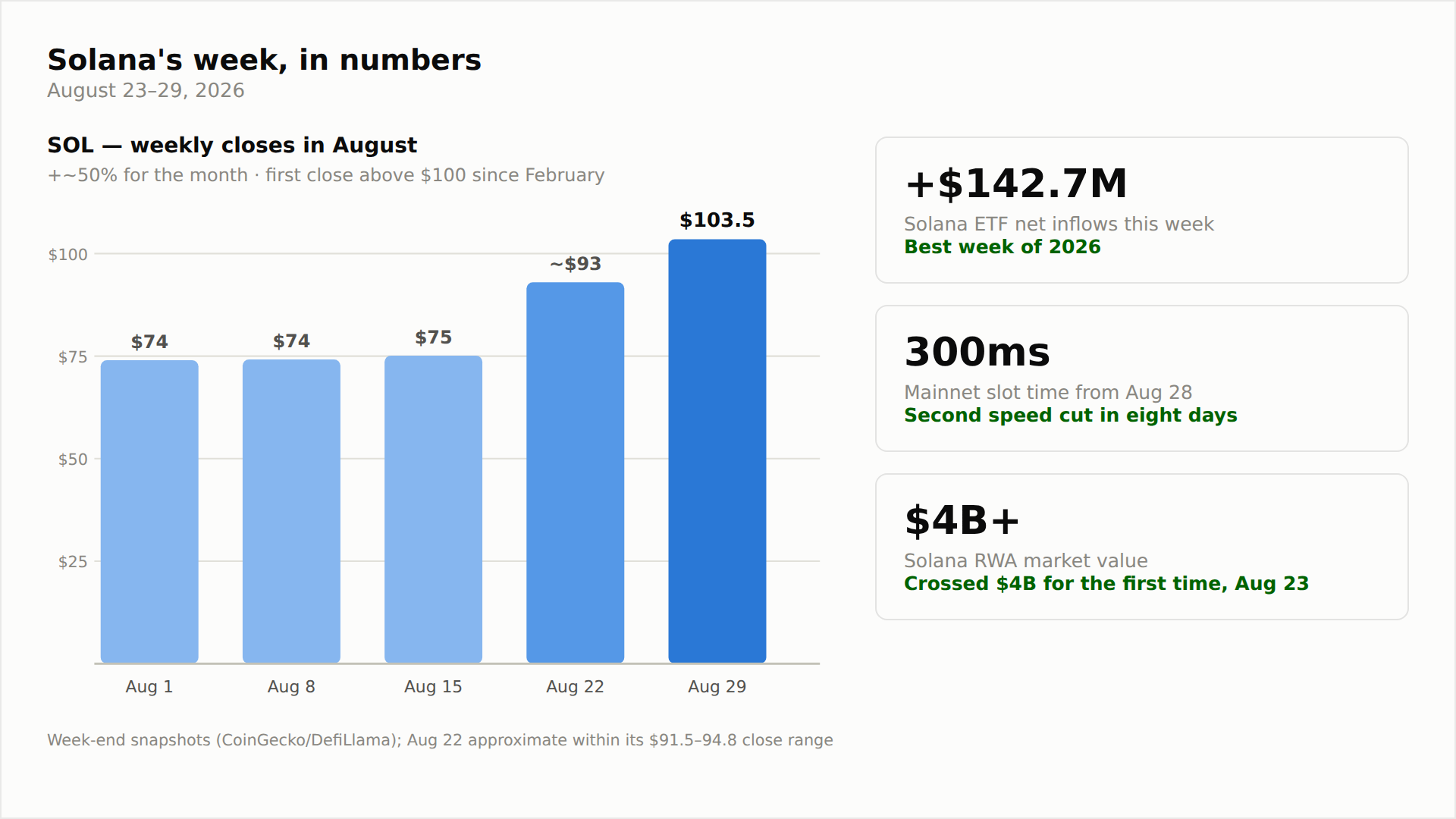
Solana had one of its biggest weeks of the year, its first binding governance vote, another network speed upgrade, SOL back above
Here’s what happened this week.
Coinbase brings Chainlink into tokenized-stock infrastructure
One of the biggest developments of the week came on August 24, when Coinbase announced a partnership with Chainlink to support new tokenized stocks for DeFi users on Base.
The announcement focuses on Chainlink’s infrastructure and oracle capabilities, with the goal of supporting tokenized stock products as they reach a broader DeFi audience.
It is important to separate the announcement from a live lending product. The lending market itself had not launched yet.
Still, the development highlights an important part of tokenized finance that often receives less attention: the infrastructure underneath the asset.
A tokenized stock needs reliable pricing before it becomes useful inside lending protocols. DeFi applications need to know what an asset is worth, how its price changes and how that information should feed into risk systems.
As more traditional assets enter onchain markets, oracle infrastructure becomes increasingly important.
The market is therefore expanding across several layers at once.
Issuers are bringing assets onchain. Exchanges are distributing them. DeFi protocols are exploring how to use them. Infrastructure providers are building the systems required to make those interactions work.
Binance’s bStocks continue expanding
Tokenized equity distribution also remained strong this week.
Data reported on August 24 showed Binance’s bStocks had reached approximately 522,000 holders, with estimated assets under management between $500M and $624M.
The platform also added DJTB on August 26.
The growth is significant because it shows tokenized equities reaching users through platforms with an existing crypto audience.
Instead of requiring users to seek out a dedicated tokenization platform, products like bStocks place traditional equity exposure inside an environment where users already trade digital assets.
The result is a more direct connection between conventional markets and crypto infrastructure.
There is still a gap between distribution and DeFi utility, though.
Venus continued to show zero verified borrow caps for bStocks during the week. Meanwhile, other platforms are already working toward lending and collateral use cases.
That difference is becoming one of the more interesting parts of the market.
Getting a tokenized stock into users’ wallets is one milestone.
Giving users financial options around it is another.
Aave looks toward another tokenized fund
Aave Horizon also continued expanding its RWA ambitions.
On August 27, an ARFC proposed onboarding mWIN, a tokenized fund from Midas and Wellington Management, to Aave Horizon.
The proposal is still in the governance process, with risk parameters pending further review.
The development adds another institutional asset to the list of products being considered for DeFi lending infrastructure.
Tokenized funds are increasingly being treated as potential financial building blocks rather than standalone investment products.
That distinction matters.
When an asset enters a lending market, its function changes. It becomes part of a system where capital, collateral and borrowing interact.
Aave Horizon ended the week with approximately
The broader Aave ecosystem remained much larger, with Aave v3 reaching approximately
The difference between these figures also shows where RWA-focused lending sits today.
It is still a smaller segment of the wider DeFi lending market, but protocols are actively building the infrastructure needed for it to grow.
DeFi lending continues attracting liquidity
The broader lending market had a solid week.
Morpho Blue reached approximately $9.46B in TVL, up 1.5%.
Maple stood around $3.02B, with the team tracker showing a 9.3% weekly increase.
Ondo Yield reached approximately
Venus reached around
Kamino reached approximately
Jupiter Lend crossed
These numbers provide useful context for the RWA market.
Tokenized assets are entering an increasingly liquid DeFi environment. Protocols already managing billions in deposits are exploring how traditional financial assets fit into their lending systems.
At the same time, new RWA-focused products are competing for liquidity alongside established crypto assets.
That creates a much larger market for tokenized collateral to enter.
Loopscale’s tokenized-equity market continues
Loopscale’s SECZ lending market also continued operating during the week.
The market went live on August 20, so the launch itself belongs to last week and is not being counted as a new event here.
What changed this week was the capital position around the market.
TVL moved from approximately $88.3M to around $92.5M by August 29.
That movement provides a useful indication of continued activity around tokenized-equity lending.
It also shows why the market is starting to pay more attention to what tokenized stocks do inside DeFi.
The asset does not need to remain a passive representation of a traditional security.
It can become part of a credit market.
Ether.fi expands its tokenized-asset strategy
Ether.fi also remained active around tokenized assets and lending.
Its broader product expansion includes xStocks and portfolio loans powered by Aave infrastructure.
The Aave V4 Optimism market connected to the strategy reached approximately
The development adds another example of traditional asset exposure being packaged alongside borrowing functionality.
It also shows how tokenized assets are increasingly becoming part of broader financial products rather than being offered in isolation.
Users are beginning to encounter tokenized assets inside lending products, portfolio management tools and other financial applications.
Bybit prepares equity perpetual options
Bybit announced another development toward the end of the week involving equity perpetual options.
The first products include SPCX and NVDA, with the offering scheduled to go live on September 17.
The launch has not happened yet, so it belongs in the forward-looking section rather than the week’s completed events.
Still, it shows how quickly traditional equity exposure is being combined with crypto-native financial products.
Spot exposure is one layer.
Lending is another.
Derivatives add another layer of financial activity around the same underlying assets.
This expansion is one of the reasons tokenized finance is becoming a broader market category rather than a single product type.
Solana holds its first binding governance vote
Solana crossed a governance milestone this week, and the results were split.
The network’s first binding onchain governance vote closed on August 28. SGP-0001, the network constitution, passed with roughly 95% support. SGP-0002, which doubles disinflation and removes roughly 18.9M SOL of future issuance, passed at 67.00%, just above the 66.67% threshold, with a last-hour vote change by Kraken’s validator deciding the outcome. SGP-0003, which would have increased fee burns roughly 13–14x, failed at around 62.7%.
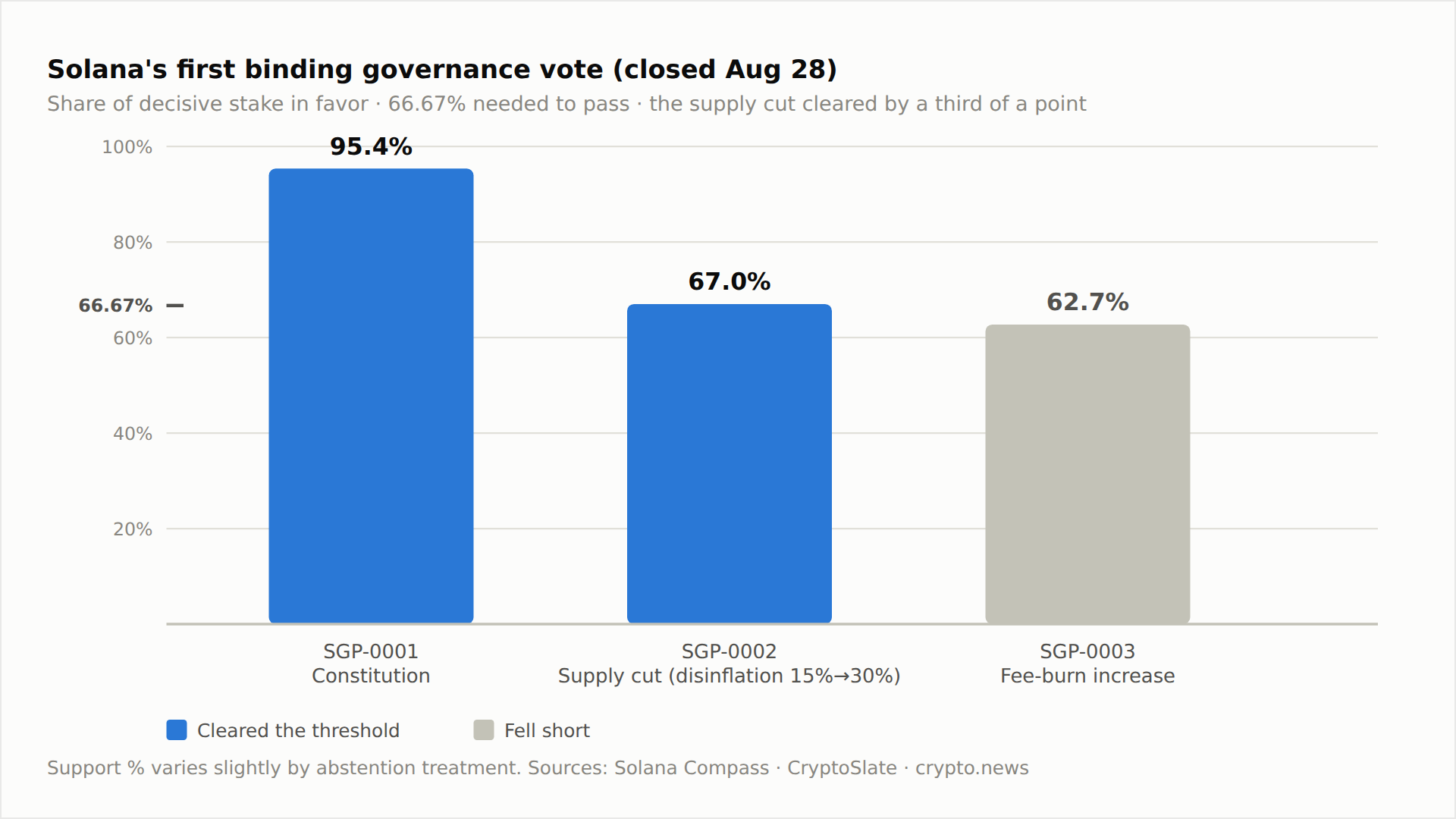 It was the first time Solana’s protocol economics were decided by a binding stake-weighted vote.
The episode showed two things at once: that onchain governance works at this scale, and how much influence large validators carry when a decision comes down to a third of a percentage point.
For the network’s economics, the outcome means future SOL supply growth slows meaningfully, while the fee regime stays unchanged for now.
The network got faster, again
Solana also delivered its second speed upgrade in eight days.
On August 28, the network activated 300ms slot times at epoch 1024, following the cut to 350ms on August 21. Block times are now 25% faster than they were a month ago, and both activations completed without reported incidents.
Faster settlement matters directly for tokenized finance.
Lending markets, liquidation systems and trading venues all benefit from shorter confirmation windows, particularly as more real-world collateral moves onchain.
The Alpenglow consensus upgrade, targeting roughly 150ms finality, remains scheduled for late September.
SOL reclaims Markets added their own signal this week. SOL crossed Solana ETFs recorded approximately And Charles Schwab announced it will offer spot SOL trading to its 39M+ brokerage accounts. Solana’s RWA market also crossed $4B in value for the first time on August 23. Institutional access, network performance and tokenized-asset activity are all moving in the same direction at once. The macro backdrop turned more cautious The week ended on a more careful note. July core PCE came in at 3.3% on August 26, slightly above expectations. Then on August 28, Fed Chair Kevin Warsh delivered his first Jackson Hole keynote with a hawkish message: “We have work to do.” Markets responded quickly. September rate-hike odds moved from roughly 35% to a coin flip, Treasury yields rose, and crypto prices pulled back from their weekly highs, Bitcoin fell about 3% toward $78K.
They keep the bar high for onchain yield products competing with T-bills. But they also strengthen the case for borrowing against assets rather than selling them, the exact function lending markets around tokenized collateral are being built to serve. When infrastructure fails: the week’s security lessons The week also showed what happens when the infrastructure underneath tokenized markets breaks. On Morpho, a roughly $320K token dump moved a 15-minute TWAP oracle about 3%, cascading approximately $36M in liquidations of looped positions. Moonwell on Base lost roughly $8.7M to a manipulated long-tail asset price, its third incident in under a year. And Neutrl disclosed it holds only about None of these involved tokenized stocks. But all three carry the same lesson for the RWA market. Lending protocols need reliable pricing. Collateral systems need accurate valuations. Risk engines need timely information. Liquidation systems need dependable market data. This is why infrastructure providers such as Chainlink are becoming increasingly relevant to tokenized finance, and why oracle design is becoming one of the sharpest diligence questions in the market. The growth of RWA depends on more than issuing assets. The systems surrounding those assets need to support them too. Traditional banks keep testing the rails Institutional settlement infrastructure also kept moving. On August 27, CIMB settled Malaysia’s first tokenized sukuk, roughly $342M, using tokenized deposits. On August 28, UOB became the first Singapore bank to transact on Swift’s tokenized-deposit ledger, completing live cross-border legs with HSBC. And Revolut launched a euro stablecoin, EURR, while phasing out USDT support across Europe under MiCA. Each is a different geography and a different instrument, but the direction is the same: regulated institutions are moving real settlement activity onto tokenized rails. Solana remains part of the RWA lending race Solana continues to play an important role in the tokenized-equity market, particularly around DeFi integration. Loopscale’s SECZ market is one example of tokenized equity becoming lending collateral on the network. The wider Solana lending ecosystem also remains substantial. Kamino ended the week around These figures cover their broader lending activity, rather than tokenized stocks specifically, but they show the depth of the liquidity environment where RWA lending products are developing. The week brought smaller signals too: Backpack listed tokenized Moderna with $4.5M in day-one volume, xStocks launched inside Kraken Wallet with 700+ tokenized stocks and ETFs, and Serbia’s finance ministry met with the Solana Foundation to discuss tokenizing the Belgrade Stock Exchange. The ecosystem is becoming increasingly competitive. Different protocols are positioning themselves around lending, portfolio management, tokenized assets and structured financial products. That competition matters because liquidity is one of the main ingredients required for tokenized markets to scale. The market is moving from ownership toward utility The strongest theme from August 23–29 is the growing focus on utility. Tokenized stocks are attracting hundreds of thousands of holders. Tokenized funds are being proposed as collateral. Oracle infrastructure is being developed around tokenized markets. Lending protocols are managing billions of dollars in liquidity. And platforms are building products around borrowing and financial exposure to traditional assets. The market is therefore moving into a more interesting phase. The question is no longer only whether a stock, fund or other real-world asset exists onchain. The bigger question is what financial functions become available once it gets there. That includes lending. Collateral. Liquidity. Structured products. And eventually, different forms of yield. The developments this week show those pieces beginning to connect. For the RWA market, this is an important transition. Tokenization provides the representation of the asset, but the financial infrastructure around it determines how useful that asset becomes inside an onchain economy. And that is where the next stage of the market is taking shape. Tokenized assets are becoming financial building blocks The biggest takeaway from this week is how quickly tokenized assets are gaining financial utility. The market is moving toward a model where an asset does more than represent ownership or price exposure. A tokenized equity can sit inside a lending market. A tokenized fund can be considered as collateral. Stablecoins provide liquidity around these positions. Oracles provide the data needed to value them. Each layer adds another use case. This is an important development for RWA because it brings tokenized assets closer to the way financial assets work in traditional markets. Ownership is one function. Collateral is another. Liquidity adds another. Yield adds another. The more of these functions become available onchain, the more useful tokenized assets become. Lending is becoming one of the key RWA use cases The growth in lending activity this week gives us a clearer picture of where tokenized finance is heading. Aave v3 ended the week with about Solana also continued to build a sizeable lending economy, with Kamino at approximately Loopscale’s SECZ market reached approximately $92.5M in TVL by August 29, up from roughly $88.3M earlier in the week. Aave Horizon is also considering mWIN, a tokenized fund from Midas and Wellington Management, as collateral. These developments show why lending is becoming an important piece of the RWA story. When tokenized assets enter lending markets, they gain another function beyond holding or trading. The asset becomes part of a larger financial system. The next question is what users do after buying Tokenized equity adoption is growing quickly. Binance’s bStocks reached approximately 522,000 holders, with estimated AUM between $500M and $624M. That growth is important, but it raises another question. What happens after a user acquires the asset? This is where the next stage of tokenized finance gets interesting. A user might want to borrow against an asset rather than sell it. They might want to access liquidity while maintaining exposure. They might want to put capital behind a strategy designed to generate additional returns. The infrastructure for these actions is gradually taking shape across DeFi. This shift changes the role of tokenized assets. They start becoming financial tools rather than simply digital versions of traditional investments. Yield is taking different forms Yield also continues to evolve across digital markets. The Bitwise and Lombard institutional Bitcoin covered-call strategy, targeting roughly 2.5% net yield, is one example of how structured strategies are entering the market. The approach uses options to generate additional returns from an underlying asset. Institutional lending is another route. Ethena and FalconX announced a The market is exploring lending, options, structured products and other strategies rather than relying on a single source of returns. For tokenized assets, this opens another avenue. The underlying asset provides exposure. Financial strategies provide additional utility around that exposure. More financial products are moving closer together Another theme from this week is convergence. Traditional equities are appearing inside crypto platforms. Tokenized funds are being considered for DeFi collateral. Lending protocols are supporting more forms of financial assets. Options products are being developed around equities. Stablecoins continue providing the settlement layer for onchain transactions. The lines between different parts of financial infrastructure are becoming less rigid. A user does not necessarily need to think about where traditional finance ends and DeFi begins. The products themselves are increasingly connecting the two. What this means for the RWA market The RWA market is entering a stage where infrastructure and utility matter as much as issuance. The number of tokenized assets will continue to matter, but it is only one measure of progress. Other questions are becoming equally important. How deep is the liquidity? Where can the asset be used? Who provides the pricing? What happens when a user needs liquidity? How is yield generated? What risks sit behind the product? These questions determine whether tokenized assets become useful parts of financial markets or remain isolated products. This week brought developments across almost every layer. Distribution expanded through bStocks. Oracle infrastructure moved forward through Coinbase and Chainlink. Lending activity continued through Loopscale. Aave explored another institutional tokenized fund. DeFi liquidity remained strong across major lending protocols. Solana passed its first binding governance vote and got faster, twice. Structured yield strategies continued developing. The pieces are starting to connect. Where Spout fits This is the part of the market we have been watching closely at Spout. We believe the next opportunity in tokenized finance sits beyond simply putting equities onchain. It sits in what users do with them afterward. Spout is building around tokenized equities, borrowing and yield, with the goal of giving users more utility from their asset exposure. And this week, we took another step forward. Our beta is now live on testnet. Users can begin exploring the product and getting a first look at how tokenized equities, collateral, borrowing and yield come together inside Spout. The timing is significant. Tokenized equities are gaining distribution. DeFi is becoming more comfortable with real-world assets as collateral. Lending markets are attracting liquidity. Structured yield is becoming more sophisticated. Infrastructure connecting traditional assets to DeFi is improving. And the chain we build on just got faster and proved its governance works. We are building in the middle of this shift. The next phase is already taking shape RWA has moved a long way from the question of whether traditional assets belong onchain. The market is now working through a more practical question. What should users be able to do once those assets are there? This week’s developments give us part of the answer. They should be usable as collateral. They should connect to liquidity. They should work with reliable financial infrastructure. They should support strategies designed around different user goals. And the experience around all of this needs to be simple enough for people to understand. At Spout, we are building toward this next layer of tokenized finance. Spout beta is live on testnet. Explore the product and experience how tokenized equities, collateral, borrowing and yield work within the Spout ecosystem. The infrastructure is coming together.
The market is moving forward.
Now you get to experience what we have been building.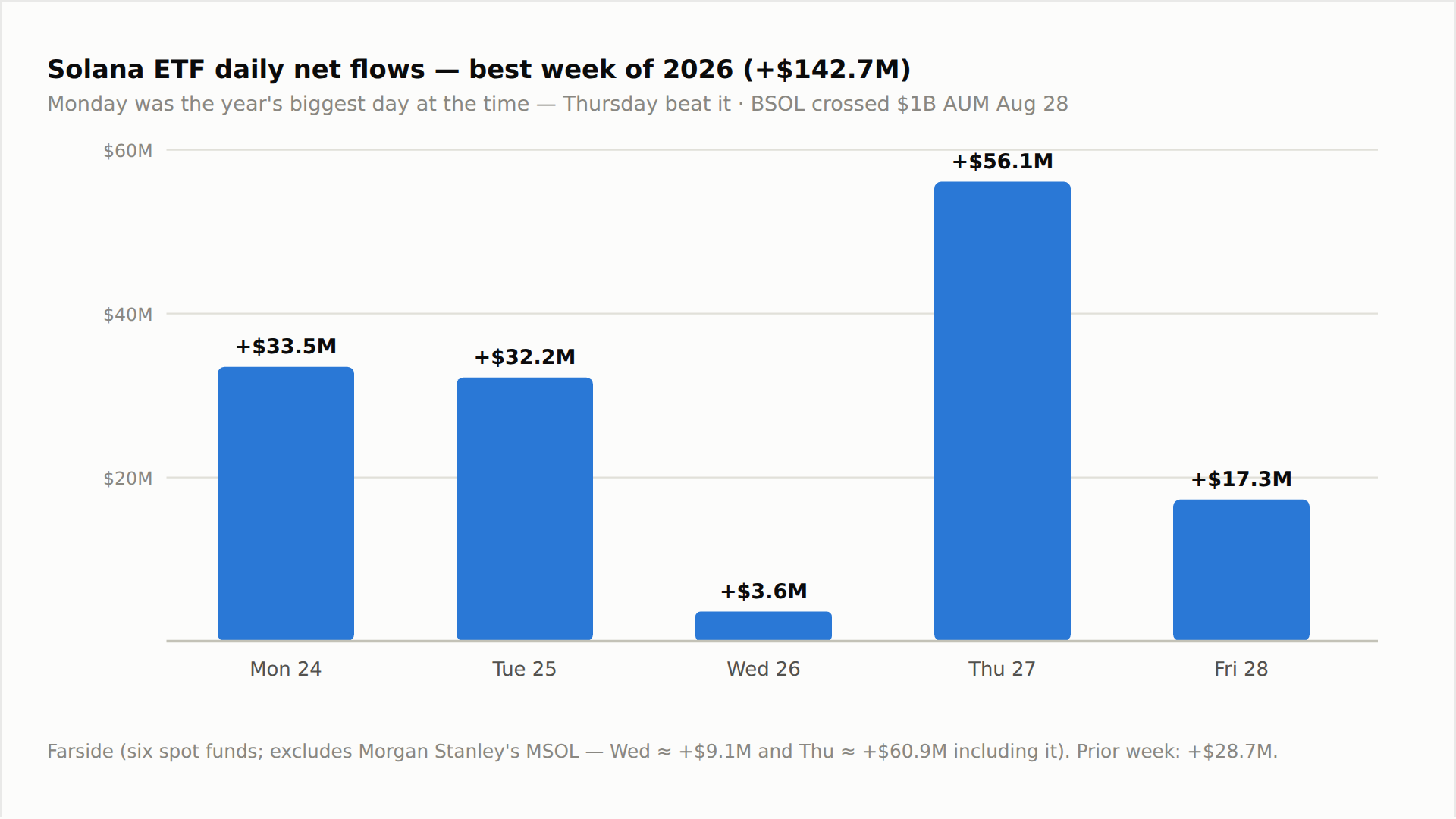 Bitwise’s BSOL crossed
 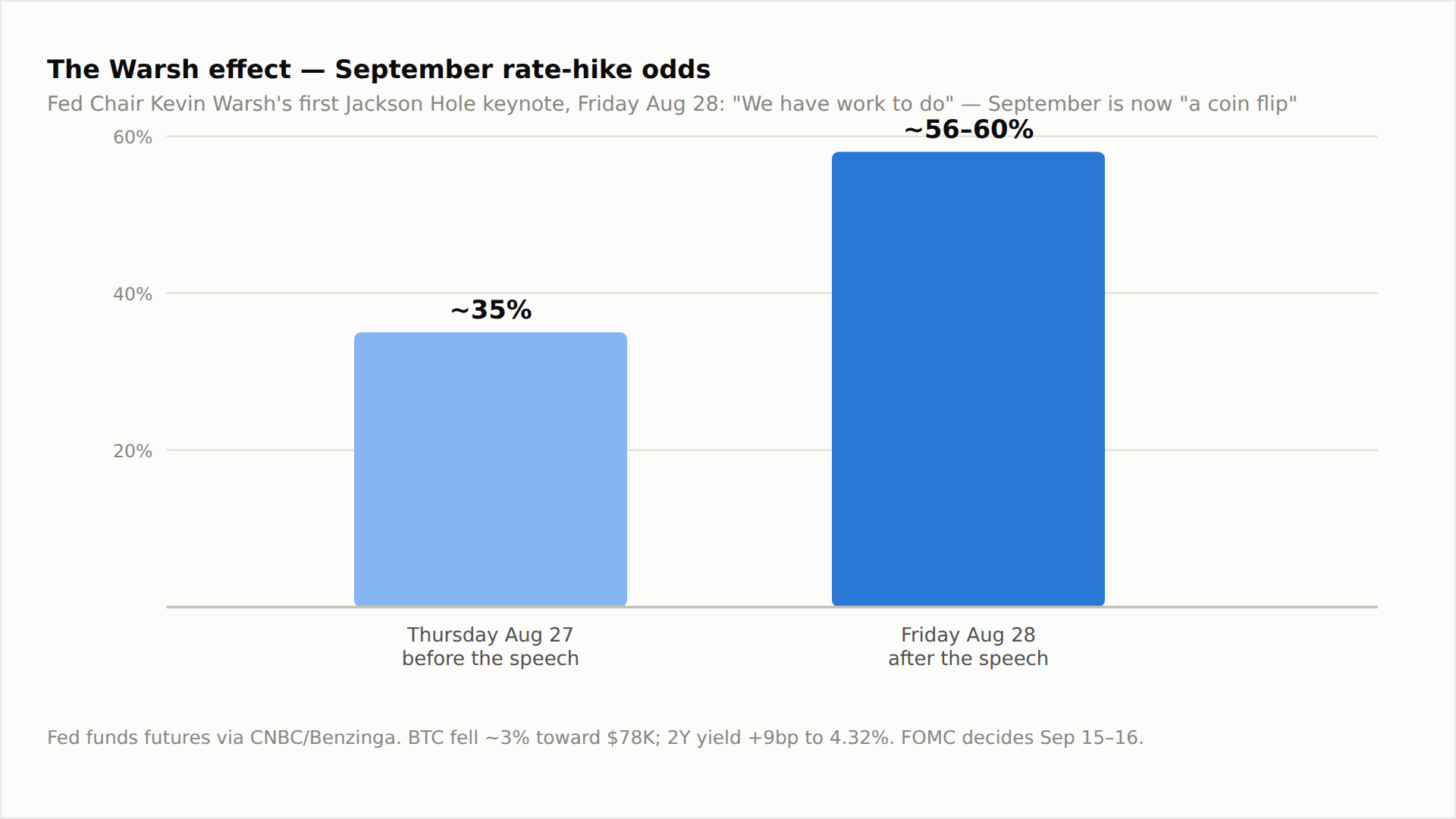 Higher-for-longer rates cut both ways for tokenized finance.
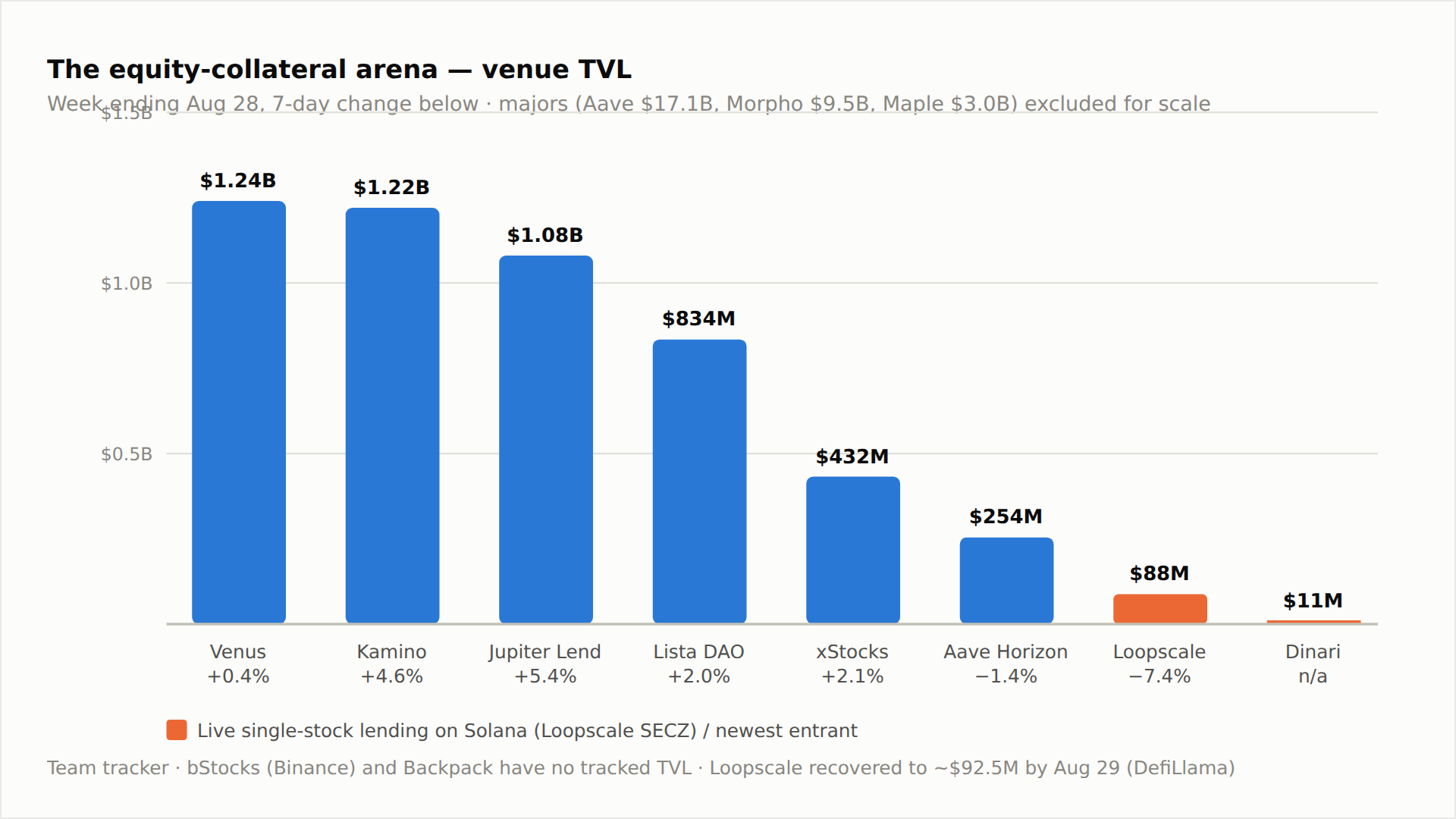 Within this broader market, tokenized assets are beginning to occupy their own space.
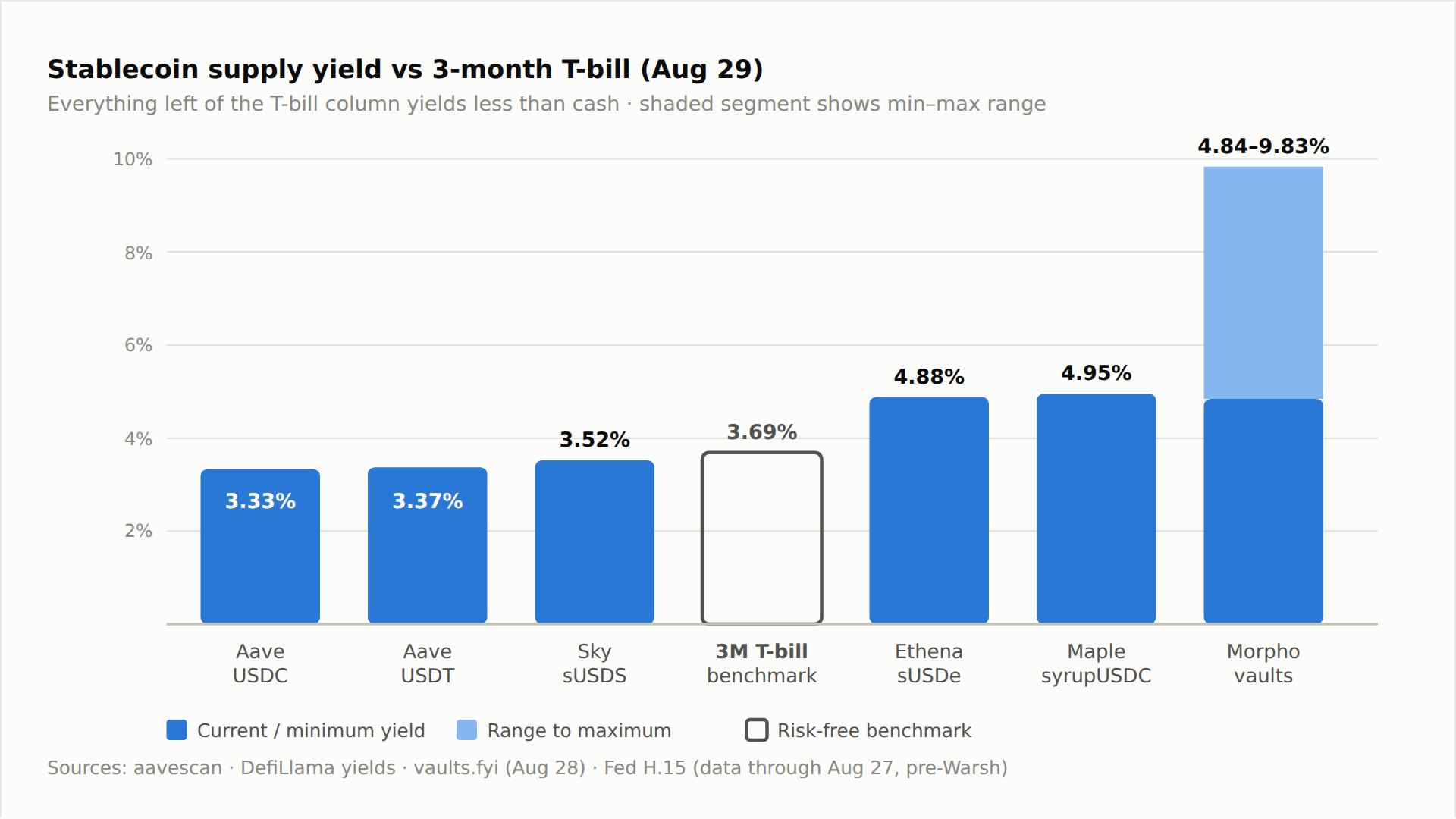 Together, these developments show a broader search for ways to put capital to work.